
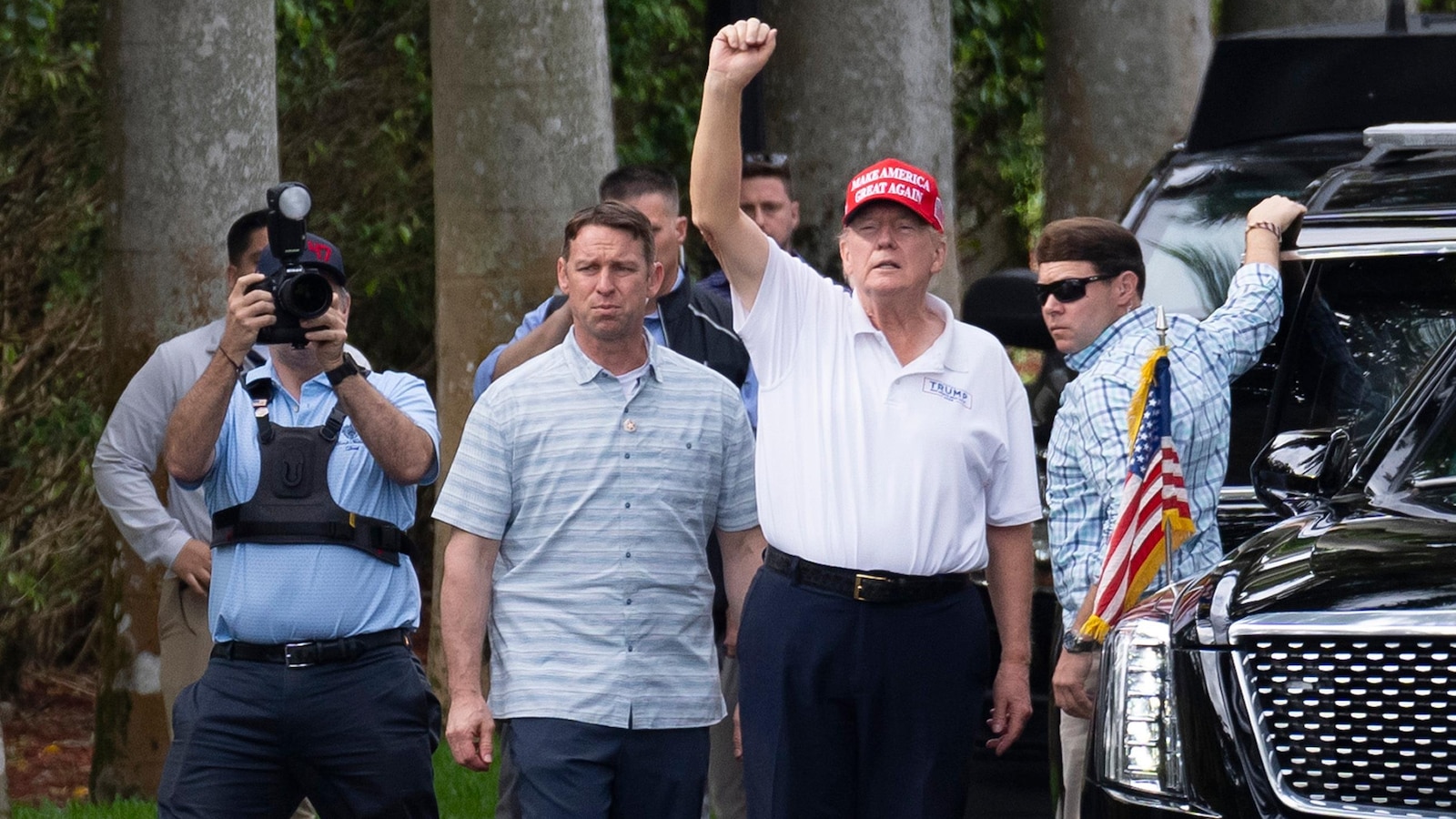
Trump’s Bold Move: Securing a Qatari Golf Resort and Expanding Global Footprint
In a strategic expansion of his international business empire, former U.S. President Donald Trump has finalized a deal to acquire a luxury golf resort in Qatar. The agreement, confirmed this week, marks Trump’s first major foreign investment since leaving office and signals his renewed focus on global hospitality ventures. The development comes as Qatar prepares to host high-profile sporting events, positioning the Trump Organization to capitalize on the region’s growing tourism market.
A Strategic Play in the Middle East
The yet-unnamed resort will occupy prime real estate along Qatar’s Persian Gulf coastline, featuring an 18-hole championship golf course, 250 luxury villas, and a Trump-branded hotel. Industry analysts estimate the project’s value at $300-400 million, with construction slated to begin in early 2025. This move follows Qatar’s successful hosting of the 2022 FIFA World Cup, which boosted the nation’s global profile as a luxury destination.
“This isn’t just about golf—it’s about planting a flag in one of the world’s fastest-growing luxury markets,” says Marcus Goldman, a Dubai-based hospitality consultant. “Qatar’s per capita GDP exceeds $80,000, and its tourism sector grew 45% last year. Trump is positioning himself where the money is flowing.”
Political and Business Implications
The deal raises questions about the intersection of Trump’s business interests and political future. While the Trump Organization maintains this is purely a commercial venture, ethics watchdogs note potential conflicts:
- Qatar hosts the largest U.S. military base in the Middle East
- The country spent $138 million at Trump properties during his presidency
- Timing coincides with Trump’s 2024 campaign fundraising efforts
“There’s no legal barrier, but the optics are problematic,” explains Georgetown University ethics professor Laura Simmons. “When a former president—who may become president again—engages in major deals with foreign governments, it creates perception issues about influence peddling.”
The Golf Diplomacy Angle
Trump’s golf course developments have long served as diplomatic tools. His portfolio now spans 17 countries, with Middle Eastern properties in Dubai, Abu Dhabi, and now Qatar. The Qatari deal reportedly includes:
- 30-year land lease with renewal options
- Tax incentives for the first decade
- Partnership with Qatar’s sovereign wealth fund
“Golf resorts are perfect soft power instruments,” notes sports economist David Pearson. “They attract elite travelers, create local jobs, and foster long-term relationships. For Qatar, aligning with the Trump brand brings instant recognition as they diversify beyond oil.”
Market Reactions and Competitive Landscape
The announcement sent ripples through the hospitality sector. Shares of competing regional developers dipped 2-3%, while Trump-affiliated SPACs saw modest gains. The Qatari project will compete directly with:
- PGA-certified courses in Dubai
- Four Seasons Resort Doha
- St. Regis Pearl-Qatar
Industry data suggests Qatar can support this expansion. The country welcomed 4 million visitors in 2023, with golf tourism growing 28% annually. However, some analysts urge caution. “The luxury market is becoming saturated,” warns HSBC’s Middle East research head Amina Farooq. “Between Saudi’s NEOM and UAE developments, Qatar must differentiate its offering.”
What This Means for Trump’s Business Future
This deal represents a calculated pivot. Since 2021, the Trump Organization has:
- Sold the Washington D.C. hotel for $375 million
- Paused new U.S. developments
- Focused on international licensing deals
“Domestic headwinds—legal battles, political scrutiny—make overseas expansion pragmatic,” observes NYU business professor Ethan Cole. “In the Gulf, Trump’s brand still carries cachet, and governments prefer dealing directly with property owners rather than licensees.”
The Qatar venture follows Trump’s playbook of aligning with ambitious development projects. Similar to his Scottish and Irish golf resorts, this project will likely feature:
- Signature Trump design elements
- Membership tiers targeting ultra-high-net-worth individuals
- Annual PGA Tour exhibition events
Looking Ahead: Risks and Opportunities
While promising, the deal carries inherent risks. Qatar’s summer temperatures exceed 110°F, potentially limiting year-round play. The country also maintains strict alcohol laws that could deter some golfers. However, the Trump Organization appears confident, citing advanced climate-control technologies and premium “dry resort” experiences.
Geopolitical factors also loom large. As Qatar navigates tensions between Iran and Gulf neighbors, the resort’s success may hinge on regional stability. “This is a 30-year bet on Qatar remaining a neutral oasis,” says Middle East analyst Rachel Fawaz. “If that holds, Trump secures a legacy asset. If not, it becomes another geopolitical flashpoint.”
For observers tracking Trump’s next moves, this development offers clues. The deal’s structure—with Qatar’s sovereign wealth fund as minority partner—suggests more Gulf investments may follow. With Saudi Arabia’s Vision 2030 creating $800 billion in tourism projects, Trump’s team has reportedly scouted additional sites.
What to watch: Will this venture spark renewed scrutiny of foreign dealings by U.S. political figures? How will competitors respond? And could this model redefine post-presidential business activities? As the resort breaks ground next year, these questions will begin finding answers.
For deeper analysis on the intersection of global business and politics, subscribe to our investigative newsletter.
See more Business Focus Insider Team
