
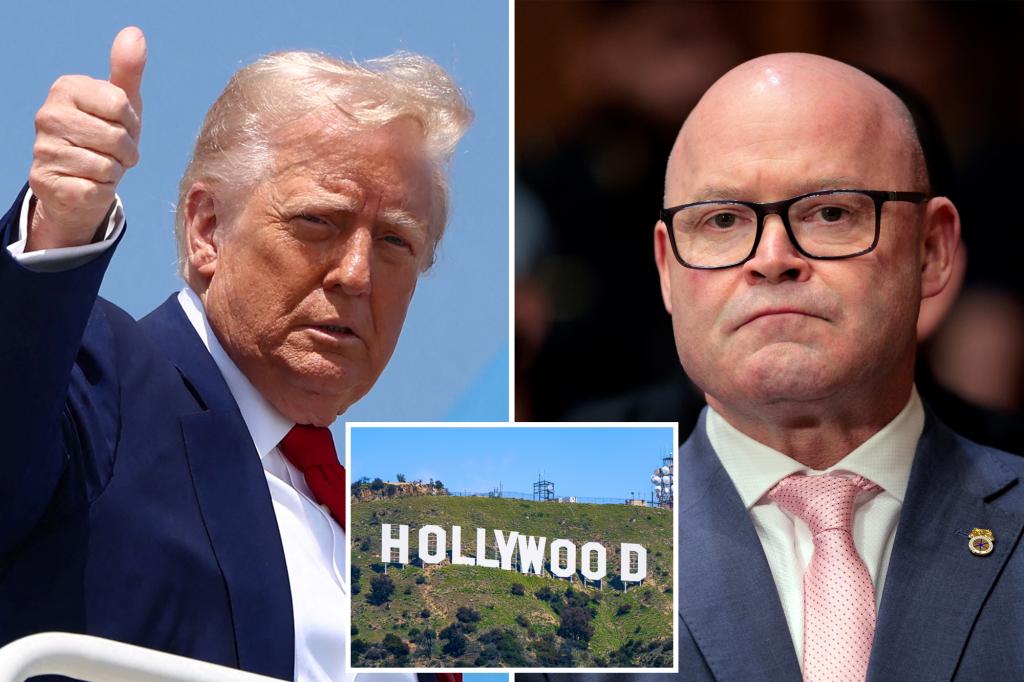
Teamsters Chief Backs Trump’s Film Tariff Amid Hollywood Outsourcing Debate
In a striking endorsement, Teamsters President Sean O’Brien praised former President Donald Trump’s proposed tariff on foreign films as a safeguard for American jobs, while lambasting Hollywood’s outsourcing practices. The dual stance, announced at a labor conference in Los Angeles this week, reignites tensions over globalization’s impact on U.S. entertainment workers and the efficacy of protectionist policies.
A Union Leader’s Unlikely Alliance
O’Brien, whose union represents 60,000 film and TV workers, called Trump’s 10% tariff proposal—first floated in 2020—a “necessary shield” against runaway production. “When studios chase tax breaks in Canada or the UK, they’re exporting middle-class careers,” O’Brien stated. His remarks align with Trump’s “America First” agenda but clash with most Hollywood unions, which oppose tariffs over fears of foreign retaliation.
The Teamsters’ position reflects grim industry trends:
- U.S. film/TV production spending abroad hit $10.3 billion in 2022 (MPAA data)
- Canada’s share of North American filming days grew from 22% to 34% since 2015 (FilmLA research)
- Georgia and Louisiana lost 14,000 crew jobs to overseas competitors since 2018 (BLS analysis)
Hollywood’s Outsourcing Dilemma
Major studios increasingly film overseas, drawn by subsidies averaging 25-30% of budgets. Recent examples include Disney’s Pinocchio (shot in the UK) and Netflix’s The Gray Man (Czech Republic). “It’s economic arbitrage,” said UCLA labor economist Dr. Helen Chu. “When a Toronto soundstage costs 40% less than Burbank’s, bean counters win—but communities lose vital payrolls.”
Opponents counter that tariffs could spark trade wars. “Retaliatory measures might block our $17 billion in annual foreign film revenue,” warned Independent Film & Television Alliance head Jean Prewitt. China’s 2018 quota on U.S. films—a response to Trump-era steel tariffs—cost studios an estimated $500 million.
The Tariff’s Potential Ripple Effects
Trump’s plan would apply to films with:
- Over 50% U.S. financing
- Primary creative control by American studios
- Post-production completed domestically
Supporters argue it could repatriate 12,000 jobs annually (per a 2021 Economic Policy Institute model). However, California’s nonpartisan Legislative Analyst’s Office warns the policy might accelerate digital outsourcing, as virtual production tools enable remote collaboration.
Divisions Within the Labor Movement
While Teamsters champion the tariff, IATSE Local 600 cinematographers’ guild opposes it. “This isn’t the 1980s auto industry,” said Local 600 VP Sarah Ramos. “Our members work globally—we need trade pacts, not walls.” Meanwhile, SAG-AFTRA remains neutral, focusing instead on AI protections in its landmark 2023 contract.
O’Brien remains undeterred: “If Washington can bail out Detroit, why not Hollywood? Every Marvel movie shot in Atlanta proves incentives work.” His rhetoric resonates in battleground states like Pennsylvania, where 1 in 3 voters rank outsourcing as a top concern (Pew Research).
The Road Ahead for Film Labor
With Trump leading GOP primary polls and President Biden courting unions, film tariffs could become a 2024 flashpoint. Congress is already debating the American Jobs in Film Act, which would expand tax credits for domestic production. Meanwhile, California’s expanded $330 million annual incentive program lured back Amazon’s The Terminal List from Hungary this year.
As streaming budgets tighten, the tariff debate underscores a deeper reckoning. “Globalization promised cheaper content but destabilized career pathways,” noted USC media professor Dr. Henry Jenkins. “The next decade will decide whether Hollywood remains a place—or just a brand.”
For workers weighing job security against creative freedom, the stakes transcend politics. “We’re not props,” said Teamsters Local 399 grip Maria Hernandez. “Real people build those CGI worlds.”
Want to influence the debate? Contact your representatives about the American Jobs in Film Act (H.R. 2871) via the House Judiciary Committee website.
See more Business Focus Insider Team
