
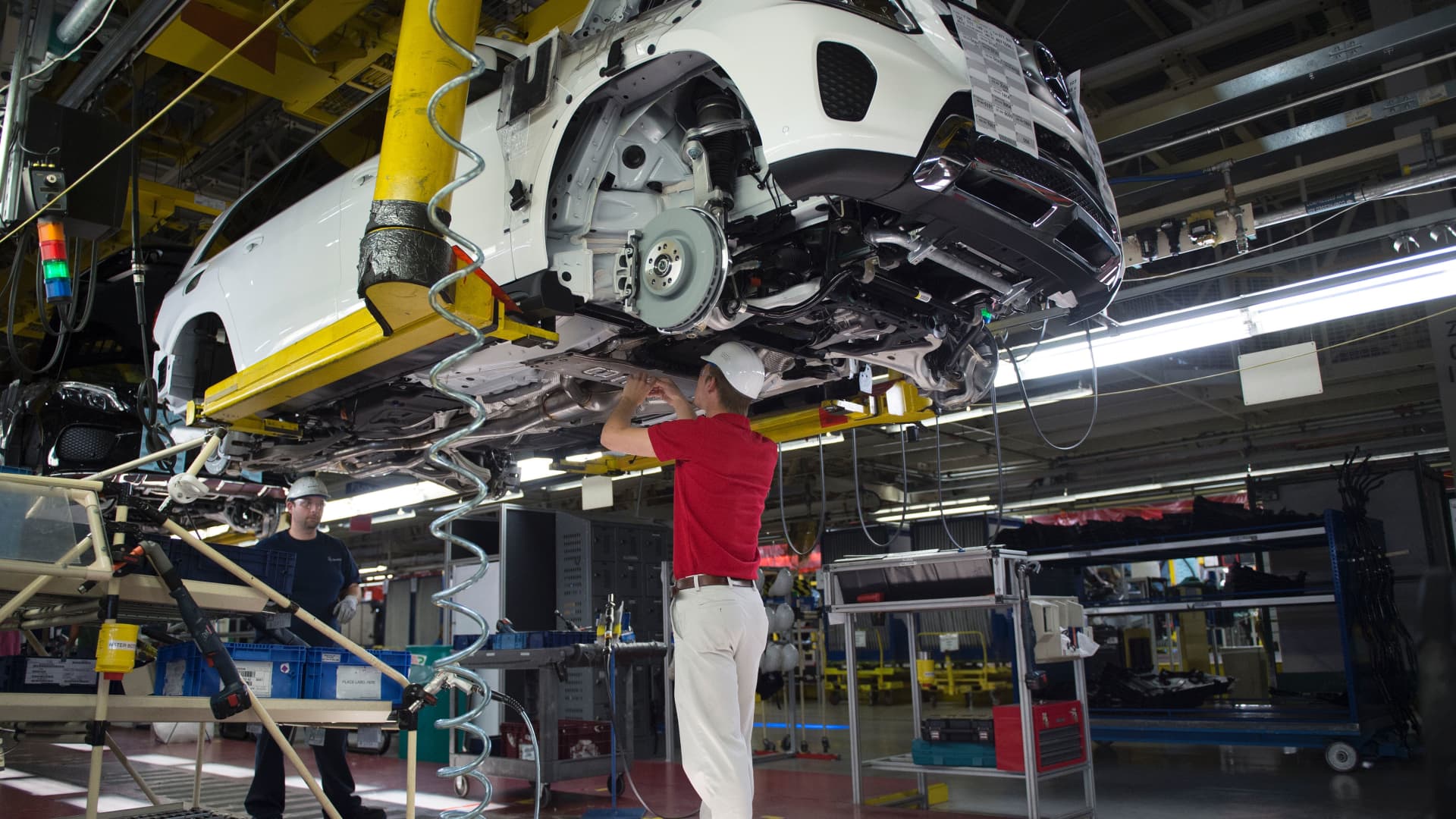
Mercedes-Benz announced plans to introduce a new vehicle at its Tuscaloosa, Alabama plant, marking a strategic expansion amid ongoing tariff challenges. The German automaker aims to strengthen its U.S. manufacturing presence while adapting to complex trade policies affecting the automotive industry. Production is expected to begin in late 2025, creating approximately 1,000 new jobs.
Strategic Investment in U.S. Manufacturing
The $1 billion expansion represents Mercedes-Benz’s commitment to localizing production as global trade dynamics shift. The Alabama facility, operational since 1997, currently produces the GLE, GLS, and Maybach GLS SUVs. The new model—rumored to be an electric SUV—will join this lineup, leveraging the plant’s existing infrastructure and skilled workforce.
“This investment underscores our long-term vision for North America,” said Michael Göbel, President of Mercedes-Benz International Production. “By expanding our Tuscaloosa operations, we’re not just adding capacity—we’re future-proofing our supply chain against geopolitical uncertainties.”
Key statistics highlight the plant’s growing importance:
- 2.7 million vehicles produced since 1997
- $7 billion total investment in Alabama operations
- 4,500 current employees with average wages 35% above state manufacturing norms
Tariff Headwinds Reshape Automotive Strategy
The expansion comes as automakers grapple with Section 232 tariffs on steel (25%) and aluminum (10%), along with evolving rules of origin requirements under USMCA. Industry analysts estimate these measures add $2,000-$3,000 to the production cost of premium vehicles in the U.S.
Dr. Liza Markham, trade policy expert at the Center for Automotive Research, notes: “Mercedes is playing chess while others play checkers. Localizing more production helps mitigate tariff impacts and qualifies vehicles for favorable treatment under regional trade agreements.”
The strategy mirrors moves by competitors:
- BMW invested $1.7 billion in its South Carolina plant in 2022
- Volvo opened its first U.S. factory in South Carolina in 2018
- Toyota and Mazda jointly invested $2.3 billion in Alabama operations
Balancing Global Trade and Local Production
While expanding U.S. production helps circumvent some tariffs, Mercedes still imports critical components. The company recently shifted some battery production from Germany to Alabama, reducing exposure to transatlantic shipping costs that have tripled since 2020.
“We’re seeing a fundamental recalibration,” explained auto industry analyst James Whitfield. “Premium brands can’t simply pass tariff costs to consumers in this economic climate. Localizing more of the value chain is becoming existential.”
The Alabama plant currently sources 65% of parts domestically, up from 50% in 2018. The expansion aims to push this to 75% by 2026 through partnerships with regional suppliers.
Workforce Development and Economic Impact
Mercedes is collaborating with Alabama’s workforce development agency to train employees in EV technologies. The automaker pledged $50 million toward technical education programs at local community colleges.
Alabama Governor Kay Ivey praised the move: “This expansion cements Alabama’s position as the epicenter of luxury automotive manufacturing in America. These are precisely the high-quality jobs we want to cultivate for our citizens.”
The project’s ripple effects are significant:
- 3:1 ratio of supplier jobs created for every auto manufacturing position
- $120 million estimated annual boost to local tax revenues
- 15% increase expected in port activity at Mobile, AL
Future Outlook for Luxury Auto Manufacturing
Industry observers view Mercedes’ move as indicative of broader trends. The Boston Consulting Group predicts that by 2030, 60% of luxury vehicles sold in America will be domestically produced, up from 45% today.
However, challenges remain. Rising interest rates and potential changes to EV tax credits create uncertainty. The Inflation Reduction Act’s battery sourcing requirements pose particular hurdles for automakers transitioning to electric fleets.
As the automotive landscape evolves, Mercedes’ Alabama expansion demonstrates how global brands are adapting to complex economic realities. The coming years will test whether such investments can maintain profitability while navigating trade policy minefields.
For consumers, this localization trend may eventually translate to more stable pricing and faster delivery times—if automakers can successfully balance their global supply chains with regional production needs.
Want to stay updated on how trade policies affect vehicle prices? Subscribe to our automotive industry newsletter for monthly analysis.
See more Business Focus Insider Team
