
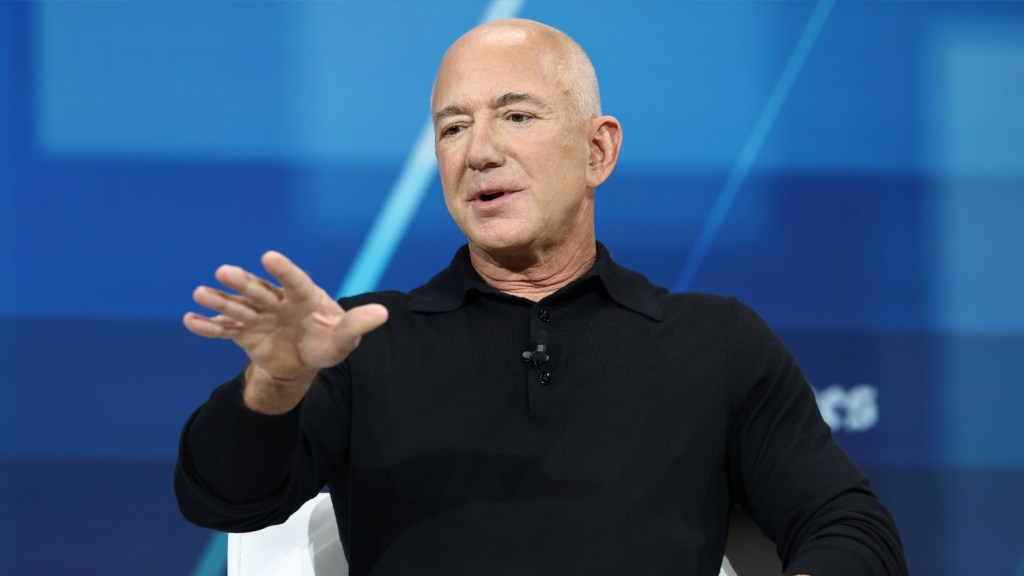
In a move that has sent ripples through financial markets, Amazon founder Jeff Bezos plans to sell up to $5 billion worth of shares in the e-commerce giant, according to recent SEC filings. The proposed divestment, expected to occur within the next quarter, marks one of Bezos’ largest stock sales in recent years and raises questions about Amazon’s future trajectory and investor sentiment toward tech stocks.
Understanding the Scale of the Divestment
The planned sale represents approximately 3% of Bezos’ total Amazon holdings, which currently stand at around 988 million shares valued at $168 billion. While the billionaire has periodically sold Amazon stock—including $8.5 billion in 2021 and $6.3 billion in 2020—the timing of this latest move has caught analysts’ attention. Amazon’s stock has surged 62% over the past year, outperforming the Nasdaq Composite’s 32% gain.
“This isn’t just routine portfolio rebalancing,” says financial analyst Miranda Cheng of Bernstein Research. “When a founder sells at peak valuation after years of holding, it inevitably makes investors wonder whether they see headwinds ahead that the market hasn’t priced in yet.”
Potential Motivations Behind the Sale
Several factors could explain Bezos’ decision:
- Blue Origin funding: The space exploration company requires billions in annual investment
- Philanthropic commitments: Bezos has pledged $10 billion to climate initiatives through the Bezos Earth Fund
- Diversification: Reducing exposure to a single stock aligns with standard wealth management practices
- Estate planning: Recent moves to Florida may reflect tax strategy considerations
Market data suggests insider selling across tech firms has increased 28% year-over-year, with Microsoft and Meta executives also reducing positions. However, Amazon’s case stands out due to Bezos’ unique position as founder and his continued influence as executive chairman.
Market Reactions and Investor Sentiment
Initial market response has been muted, with Amazon shares dipping just 1.4% in after-hours trading following the announcement. This contrasts sharply with Tesla’s 7% single-day drop when Elon Musk sold $8.5 billion in shares during 2022.
“The market is treating this differently because Bezos has established a pattern of periodic sales,” notes tech sector strategist David Parkerson. “What investors should watch is whether other Amazon executives follow suit—that would signal deeper concerns.”
Key metrics to monitor include:
- Institutional ownership trends (currently at 58% of float)
- Short interest movements (presently at 1.2% of float)
- Options market activity (put/call ratio at 0.92)
Historical Context and Precedent
Founder stock sales have preceded both temporary pullbacks and prolonged downturns in tech stocks. Comparative cases include:
| Company | Year | Sale Amount | 12-Month Performance Post-Sale |
|---|---|---|---|
| Microsoft (Gates) | 2000 | $5.1B | -56% |
| Facebook (Zuckerberg) | 2016 | $4.8B | +42% |
| Google (Page/Brin) | 2017 | $4.9B | +31% |
The mixed historical record suggests founder sales alone don’t determine outcomes, but rather interact with broader market conditions and company fundamentals.
Expert Perspectives on Long-Term Implications
Corporate governance specialists emphasize that founder sales can have symbolic importance beyond the financial impact. “When the person who knows the company best reduces exposure, it creates psychological ripple effects,” explains Wharton professor Lyle Solomon. “The key question is whether this reflects specific concerns about Amazon’s cloud growth margins or retail competition.”
Bullish analysts point to Amazon’s strong Q1 earnings (13% revenue growth, AWS accelerating to 17% growth) as evidence the company remains on solid footing. Bears highlight rising challenges:
- Intensifying cloud competition from Microsoft Azure and Google Cloud
- Regulatory pressures in multiple jurisdictions
- Labor cost pressures despite recent job cuts
What Investors Should Consider Moving Forward
For shareholders evaluating their positions, several factors warrant attention:
- Execution risk: Can new CEO Andy Jassy maintain innovation momentum?
- Valuation metrics: Amazon trades at 42x forward earnings vs 5-year average of 58x
- Macro environment: Interest rate decisions impacting tech valuations
The coming weeks may bring more clarity as Amazon approaches its annual shareholders meeting on May 22. Investors should monitor for:
- Updates on AWS growth strategies
- Advertising revenue trends
- Project Kuiper satellite internet timelines
While no single insider transaction determines a company’s fate, Bezos’ move serves as a reminder that even tech titans face evolving challenges. Investors would do well to assess their Amazon holdings in the context of both the company’s strong fundamentals and emerging sector headwinds.
For deeper analysis of tech stock valuations and insider trading patterns, subscribe to our weekly institutional investor newsletter.
See more Business Focus Insider Team
