
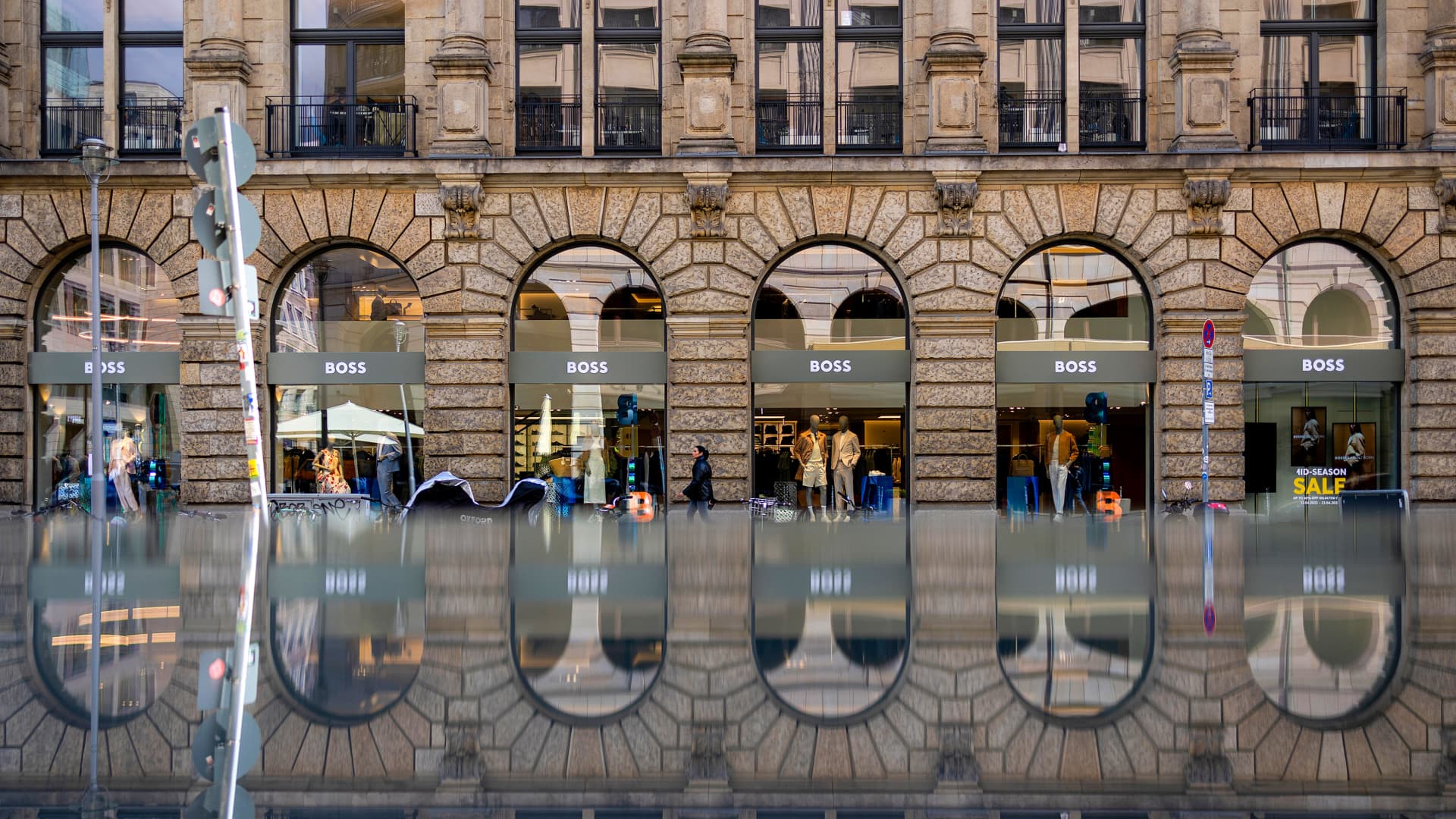
In a remarkable turnaround, German fashion powerhouse Hugo Boss saw its shares jump 8% after reporting stronger-than-expected first-quarter sales. The surprise performance, announced on April 30, 2024, defied market expectations and signaled resilience in a challenging retail environment. Analysts attribute the boost to successful pricing strategies, robust demand in key markets, and the brand’s ongoing premiumization efforts.
Breaking Down the Unexpected Financial Performance
Hugo Boss reported preliminary Q1 sales of €1.01 billion ($1.08 billion), exceeding analyst projections of €980 million. The company’s operating profit (EBIT) reached €72 million, up from €60 million in the same period last year. Particularly impressive was the 12% sales growth in Europe, its largest market, while Americas and Asia-Pacific regions grew by 5% and 8% respectively.
“This quarter proves our brand elevation strategy is working,” said Daniel Grieder, CEO of Hugo Boss, in a prepared statement. “We’re seeing particular strength in our Boss menswear collections and growing traction with younger consumers through our digital channels.”
Key drivers behind the performance include:
- 17% growth in online sales
- Successful spring/summer collection launches
- Improved full-price selling across all channels
- Strong performance in outlet stores
Market Reactions and Analyst Perspectives
The 8% share price surge marked Hugo Boss’s biggest single-day gain since November 2022. Financial markets responded enthusiastically to what many saw as evidence of the brand’s turnaround strategy gaining momentum after several quarters of mixed results.
“Hugo Boss has managed to thread the needle between premium positioning and accessibility,” noted fashion retail analyst Claudia Brückner of Bernstein Research. “Their focus on quality materials and contemporary designs at approachable price points compared to luxury peers is resonating with consumers feeling budget pressure.”
However, some analysts urged caution. “While impressive, one quarter doesn’t make a trend,” cautioned Markus Hansen, senior retail analyst at Baader Bank. “The real test will be maintaining this momentum through the second half of 2024 as economic headwinds persist.”
Strategic Moves Behind the Success
Industry observers point to several strategic initiatives that contributed to Hugo Boss’s surprise performance:
Brand Elevation Strategy: Since 2021, the company has systematically worked to move both its Boss and Hugo brands upmarket, improving product quality while carefully managing price increases. This appears to be paying dividends, with average selling prices up 9% year-over-year.
Digital Transformation: The company’s heavy investment in e-commerce and digital marketing, including partnerships with influencers and virtual showrooms, has expanded its reach to younger demographics. Mobile app sales grew 23% in Q1.
Store Optimization: Hugo Boss has been strategically closing underperforming locations while renovating flagship stores. The company opened 12 new stores in premium locations during the quarter while closing 7 less profitable ones.
Challenges and Competitive Landscape
Despite the positive results, Hugo Boss faces significant challenges in maintaining its momentum. The mid-range fashion sector remains intensely competitive, with brands like Ralph Lauren, Tommy Hilfiger, and Armani all vying for similar customers.
Global economic uncertainty continues to weigh on consumer spending, particularly for discretionary items like premium apparel. Inflationary pressures have increased production costs, though Hugo Boss has so far managed to offset these through selective price increases and efficiency gains.
The company also faces the ongoing challenge of balancing its two brands – the more conservative Boss line and the younger, edgier Hugo collection. Recent marketing efforts have sought to clarify this distinction for consumers.
Future Outlook and Investor Sentiment
Based on the strong Q1 performance, Hugo Boss raised its full-year guidance, now expecting sales growth between 6-8% (up from 5-7%) and EBIT growth of 10-12% (up from 8-10%). The company plans to continue investing in:
- Product innovation and sustainability initiatives
- Digital capabilities and omnichannel integration
- Selective retail expansion in high-potential markets
“The market is rewarding Hugo Boss for delivering on its promises,” said equity analyst Thomas Chauvet of Citi. “If they can maintain this execution quality, there could be further upside potential, though much depends on the broader economic environment.”
Looking ahead, all eyes will be on the company’s ability to sustain its growth trajectory. The fashion retailer’s next major test comes with its important fall/winter collection launches and the crucial holiday shopping season. For now, Hugo Boss has given investors reason to believe its turnaround story has real substance behind it.
Industry watchers and potential investors should monitor the company’s upcoming full earnings report on May 14 for more detailed financial disclosures and management commentary about long-term strategy.
See more Business Focus Insider Team
