
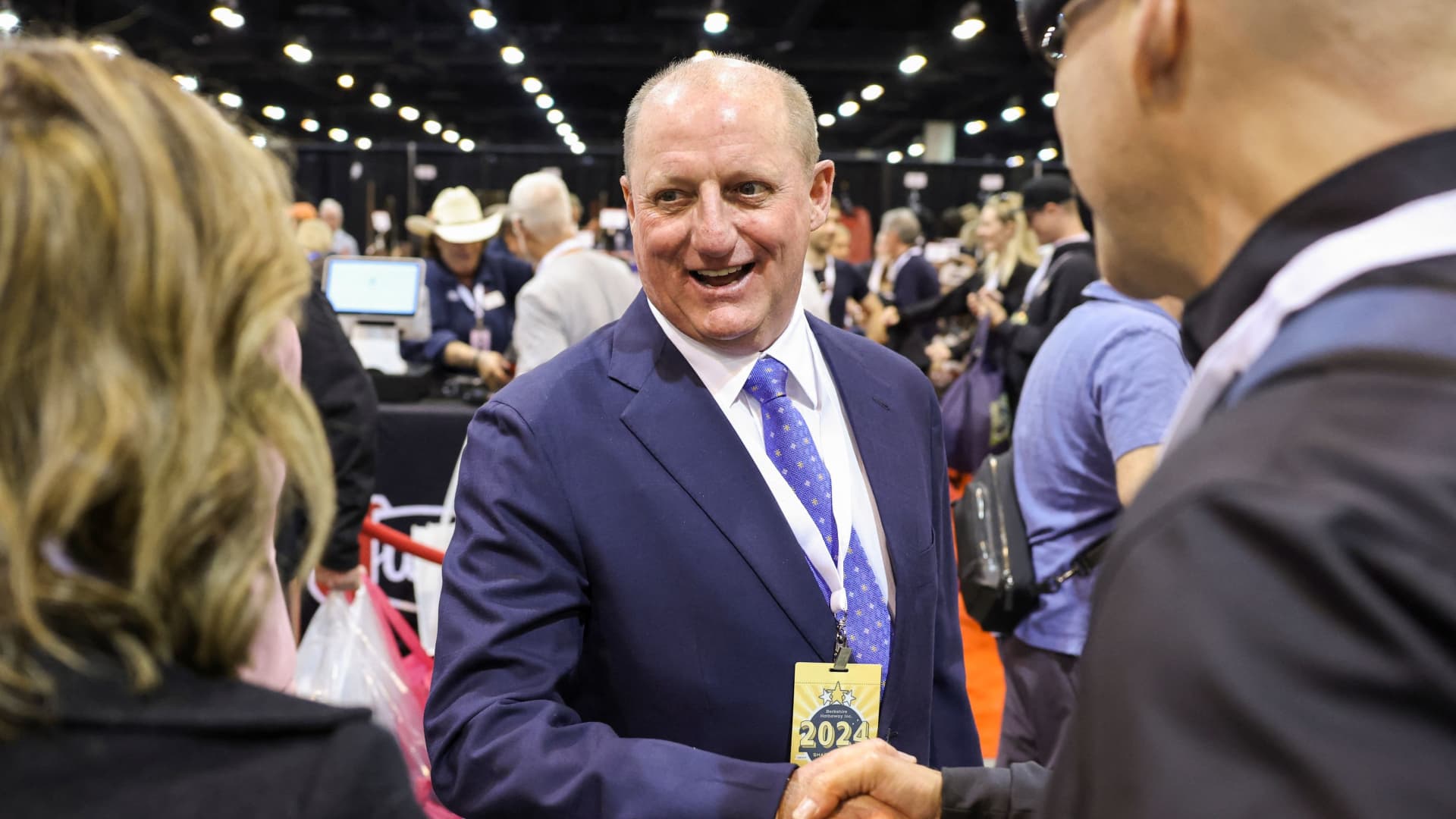
From Shadow to Spotlight: The Rise of Greg Abel at Berkshire Hathaway
Greg Abel, long considered Warren Buffett’s heir apparent, is stepping into the limelight as the 93-year-old investing legend prepares to reduce his role at Berkshire Hathaway. The 61-year-old Abel, who has quietly shaped the company’s energy and utility empire for decades, will soon helm one of the world’s most influential conglomerates. His ascent marks a pivotal transition for the $880 billion company, signaling both continuity and change in an era of economic uncertainty.
The Quiet Architect of Berkshire’s Success
Abel’s journey to the top began far from Wall Street’s glare. Born in Edmonton, Canada, he started his career at PricewaterhouseCoopers before joining MidAmerican Energy in 1992. His strategic acumen caught Buffett’s eye when Berkshire acquired MidAmerican in 2000. Over the next two decades, Abel transformed Berkshire Hathaway Energy into a $30 billion behemoth, contributing nearly 10% of the parent company’s overall earnings.
“Greg’s ability to identify undervalued assets and improve operations is second only to Warren’s,” observes David Kass, a finance professor at the University of Maryland who studies Berkshire. “He turned a regional utility into a renewable energy leader while delivering 12% annual returns—a feat even Buffett praises.”
Why Abel Was Chosen Over Other Contenders
Buffett’s succession plan crystallized in 2021 when he confirmed Abel as vice chair overseeing non-insurance operations. The decision surprised some observers given:
- Ajit Jain’s star power: The insurance chief generated $35 billion in float
- Ted Weschler/Todd Combs’ investments: The duo manages $25 billion in equities
- Charlie Munger’s influence: The late vice chair often swayed major decisions
Yet Abel’s operational expertise proved decisive. “Berkshire needs a builder, not just an allocator,” explains CNBC’s Becky Quick. “Greg modernized railroads (BNSF), utilities (PacifiCorp), and even spearheaded wind energy projects before they were fashionable.”
Challenges Facing the New Leadership
Abel inherits a company at a crossroads. Berkshire’s cash pile hit $157 billion in Q1 2024, testing Abel’s capital deployment skills. Meanwhile, regulatory scrutiny intensifies over its energy monopolies, and younger investors demand ESG alignment.
“The market will judge him on three metrics,” says Morningstar’s Greggory Warren: “Deal-making prowess, succession planning for his own eventual exit, and maintaining Berkshire’s unique culture.” Early signs suggest Abel recognizes these pressures—he recently approved a record $2.6 billion buyback and accelerated renewable investments to 38% of energy capex.
The Abel Doctrine: What Changes, What Stays
Insiders describe Abel’s management style as “Buffett-like but data-driven.” He retains core principles:
- Decentralized subsidiary operations
- Long-term value focus
However, key differences emerge. Abel reportedly favors:
- More technology investments (Berkshire recently took a $1 billion position in a cloud computing firm)
- Earlier leadership transitions (he promoted four executives under 50 to key roles)
- Transparency enhancements (quarterly earnings now include ESG metrics)
Investor Reactions and Market Implications
The market has cautiously endorsed Abel’s rise—Berkshire’s Class A shares gained 17% since his 2021 promotion, outperforming the S&P 500’s 14% return. However, some value investors express concerns.
“Greg must prove he can make elephant-sized acquisitions,” warns Whitney Tilson, former hedge fund manager. “Buffett’s last big deal was Precision Castparts in 2016 for $37 billion. The next one likely falls to Abel.”
Conversely, younger shareholders applaud Abel’s environmental focus. “His $3.4 billion Western renewables initiative shows Berkshire can lead in sustainability while profiting,” notes Sierra Club’s Ben Cushing.
The Road Ahead for Berkshire Under Abel
As Abel prepares for Berkshire’s 2025 annual meeting—likely his first as CEO—industry watchers anticipate several moves:
- Reorganizing the board (average age: 68) for generational transition
- Expanding internationally, particularly in Asian infrastructure
- Addressing climate risks across its insurance-heavy portfolio
“This isn’t just a CEO change—it’s the transfer of an American institution,” summarizes Fortune’s Andrew Serwer. “Abel must balance innovation with tradition, a challenge few executives face at this scale.”
For investors tracking this historic shift, Berkshire’s upcoming Q2 earnings call on August 3 offers the next glimpse into Abel’s vision. Those analyzing the transition might consider reviewing Berkshire’s leadership evolution timeline for deeper context on this corporate succession milestone.
See more Business Focus Insider Team
