
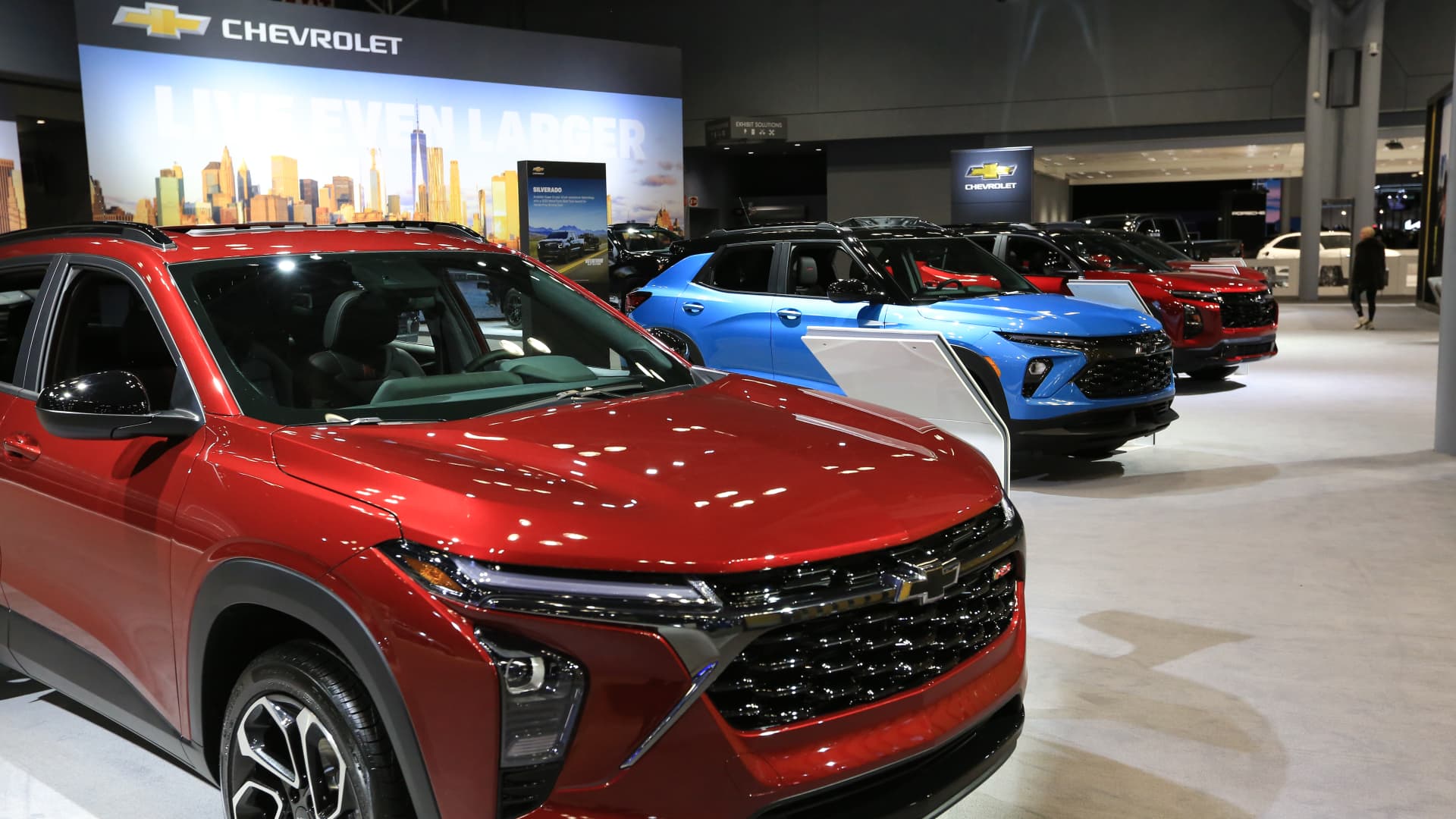
GM Adjusts 2025 Projections as $5 Billion Tariff Threats Loom
General Motors (GM) has revised its 2025 financial guidance, citing potential tariffs that could cost the automaker up to $5 billion. The Detroit-based company announced the adjustment on Wednesday, acknowledging growing pressures from global trade tensions, particularly involving China and the European Union. Analysts suggest the move reflects broader challenges facing the automotive industry as protectionist policies reshape supply chains.
Why Tariffs Are Reshaping GM’s Strategy
The $5 billion tariff exposure—representing nearly 25% of GM’s 2023 net income—stems primarily from three factors:
- Potential doubling of U.S. tariffs on Chinese EVs to 100%
- Expected EU countermeasures on American-made vehicles
- Disruptions to critical mineral supply chains for batteries
“This isn’t just about finished vehicles,” explained Dr. Alicia Reynolds, trade policy expert at the Center for Automotive Research. “GM sources approximately 15% of its battery components from China. Even if final assembly happens in North America, new tariffs could add $1,200-$1,800 per electric vehicle in costs.”
The Ripple Effects Across Operations
GM’s revised projections reveal specific operational impacts:
| Metric | Previous 2025 Guidance | Revised Guidance |
|---|---|---|
| EBIT Margin | 8-10% | 6.5-8.5% |
| EV Production | 1.5M units | 1.2-1.4M units |
| Capital Expenditures | $35B | $32-34B |
CFO Paul Jacobson emphasized during the earnings call: “We’re not retreating from our electrification goals, but we must factor in these new economic realities. Our teams are aggressively pursuing cost mitigation strategies, including localizing more supply chains.”
Industry-Wide Implications of Trade Policy Shifts
The automotive sector faces unprecedented trade policy volatility. Since 2018, average auto industry tariffs have increased from 2.5% to 6.7% globally, according to World Trade Organization data. For context:
- Every 1% tariff increase reduces automaker profits by $700 million industry-wide
- EV batteries now face 15 different trade restrictions versus just 3 in 2020
- 65% of auto executives rank trade policy as their top external risk (KPMG 2024 survey)
Diverging Views on Protectionism
Labor unions have applauded potential tariff increases. UAW President Shawn Fain stated: “For decades, American workers competed against subsidized foreign production. These measures finally level the playing field.”
However, free trade advocates warn of unintended consequences. “Tariffs function like sales taxes on consumers,” argued economist Mark Richardson from the Peterson Institute. “Our models show the proposed China EV tariffs would save 12,000 auto jobs but cost consumers $8 billion annually in higher prices.”
GM’s Multi-Pronged Response Strategy
Facing these headwinds, GM has initiated several countermeasures:
1. Supply Chain Restructuring
The company accelerated its “local-to-local” procurement strategy, recently signing agreements with:
- Lithium producers in Nevada and Quebec
- Semiconductor manufacturers in Texas
- Steel mills utilizing arc furnace technology
2. Product Portfolio Adjustments
GM will prioritize higher-margin vehicles in tariff-affected markets. Notably, the Cadillac Lyriq production for Europe will shift from China to Tennessee starting Q2 2025.
3. Lobbying Efforts
The automaker joined a coalition seeking “targeted rather than blanket tariffs,” advocating for exemptions on critical components like rare earth magnets.
What This Means for Consumers and Investors
The tariff impacts will likely manifest in several ways:
- Vehicle Prices: Expected 3-5% increase on affected models
- Product Availability: Some EU-market EVs may face delays
- Stock Performance: GM shares dipped 4.2% following the guidance revision
“Investors should watch GM’s Q3 supplier negotiations closely,” advised Barclays auto analyst Emily Park. “Their ability to secure stable component pricing will determine whether this guidance revision represents the floor or just the first step downward.”
The Road Ahead for GM and the Auto Industry
As trade policies continue evolving, GM faces critical decisions about manufacturing footprints and technological investments. The company plans to reassess its 2025 guidance again in November after several key developments:
- Final EU tariff determinations (expected September 2024)
- U.S. Treasury rules on foreign entity of concern (FEOC) compliance
- Outcome of USMCA review negotiations
Industry observers suggest this moment could accelerate two trends: either a balkanization of global auto markets or unprecedented industry collaboration to establish new trade frameworks. For consumers concerned about how these changes might affect vehicle choices and pricing, following GM’s investor relations updates provides the most timely information.
As the situation develops, one truth becomes clear: in today’s auto industry, trade policy moves as fast as the vehicles themselves—and companies must adapt even faster to stay competitive.
See more Business Focus Insider Team
