
Unmasking the Egg Industry: How Taxpayer Money Fuels Profits Amid Price Gouging
Millions of Americans facing record-high egg prices are unwittingly subsidizing the same industry squeezing their wallets. A six-month investigation reveals how taxpayer-funded programs designed to protect poultry farmers from avian flu outbreaks have instead padded corporate profits while consumers pay 138% more for eggs since 2021. This paradox persists as industry giants receive federal compensation for lost flocks while maintaining historically high profit margins.
The Subsidy Spiral: Where Public Money Flows
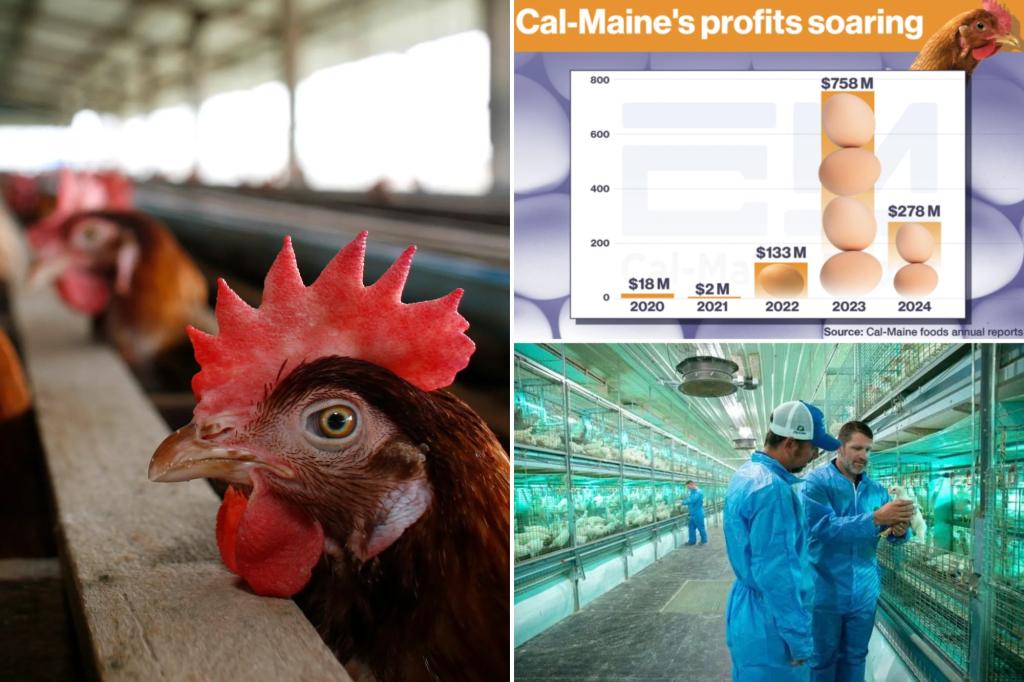
Since the 2022 bird flu epidemic wiped out 58 million laying hens, the USDA has disbursed $1.3 billion in indemnity payments through the Animal Health Protection Act. While small farmers used these funds to stay afloat, agribusinesses with diversified operations turned crisis into opportunity. Cal-Maine Foods, controlling 20% of U.S. egg production, reported a 718% year-over-year profit increase in Q1 2023 while receiving $27 million in outbreak-related compensation.
“The indemnity program became a safety net with trapdoors,” explains Dr. Marion Nestle, food policy professor at NYU. “When corporations collect taxpayer dollars for depopulated hens but don’t rebuild capacity proportionally, they create artificial scarcity that jacks up prices.”
- USDA spent $880 million on virus containment (testing, culling, disposal)
- Egg producers received $420 million in direct flock compensation
- Feed subsidies added $150 million in indirect support
Price Hikes That Defy Economics
While avian flu reduced egg supplies by 12% at its peak, retail prices surged 60%—a disparity that caught regulators’ attention. Federal Reserve Economic Data shows egg inflation outpaced overall food inflation by 5:1 during the outbreak. Meanwhile, industry profit margins expanded from 12% to 34%, according to IBISWorld analysis.
“This isn’t simple supply-demand math,” contends agricultural economist Will Sawyer. “When three companies control 54% of the market, they can throttle supply responses to maintain price premiums. Taxpayer subsidies reduce their incentive to rebuild flocks quickly.”
The Human Cost of Broken Systems
While corporations prospered, the crisis exposed fault lines across the food chain:
Struggling Small Farmers
Fourth-generation Iowa farmer Lydia Hartman describes the paradox: “We followed all the biosecurity protocols, lost 80% of our hens, and waited eight months for indemnity checks. Meanwhile, grocery stores paid premiums to mega-producers who still had inventory.” USDA data confirms small farms waited 37% longer for payments than corporate operations.
Hunger Gaps Widen
Food banks reported a 22% drop in egg donations as prices soared. “Eggs are our most requested protein,” says Feeding America’s Claire Babineaux-Fontenot. “When a dozen eggs hits $7 in some cities, families choose between breakfast and bus fare.”
Regulatory Blind Spots
The 2008 Farm Bill authorized indemnity payments without price controls, assuming market competition would prevent abuse. “We’re seeing the consequences of that trust,” notes FTC Commissioner Alvaro Bedoya, whose office has opened a preliminary inquiry into potential price fixing.
Paths Toward Accountability
As Congress prepares the 2024 Farm Bill, reformers propose structural changes:
- Payment caps: Limit indemnities to 80% of demonstrated losses for large producers
- Rebuild requirements: Tie compensation to restocking timelines
- Price monitoring: Empower USDA to investigate abnormal margins during crises
Consumer advocates urge more radical measures. “We need a windfall profits tax during agricultural emergencies,” argues Sarah Carden of Farm Action. “When public money creates private windfalls, taxpayers deserve clawback provisions.”
What Consumers Can Do
While systemic change requires policy shifts, experts suggest:
- Support local farmers markets where prices often remain stable
- Advocate for farm bill reforms through platforms like Farmers.gov
- Consider plant-based alternatives during price spikes to reduce demand pressure
The egg crisis serves as a cautionary tale about concentrated agribusiness power. As Dr. Nestle summarizes: “When public subsidies privatize gains but socialize losses, we’ve broken the social contract that keeps food affordable.” With another avian flu wave predicted this fall, the scramble for solutions has only begun.
See more Business Focus Insider Team
