
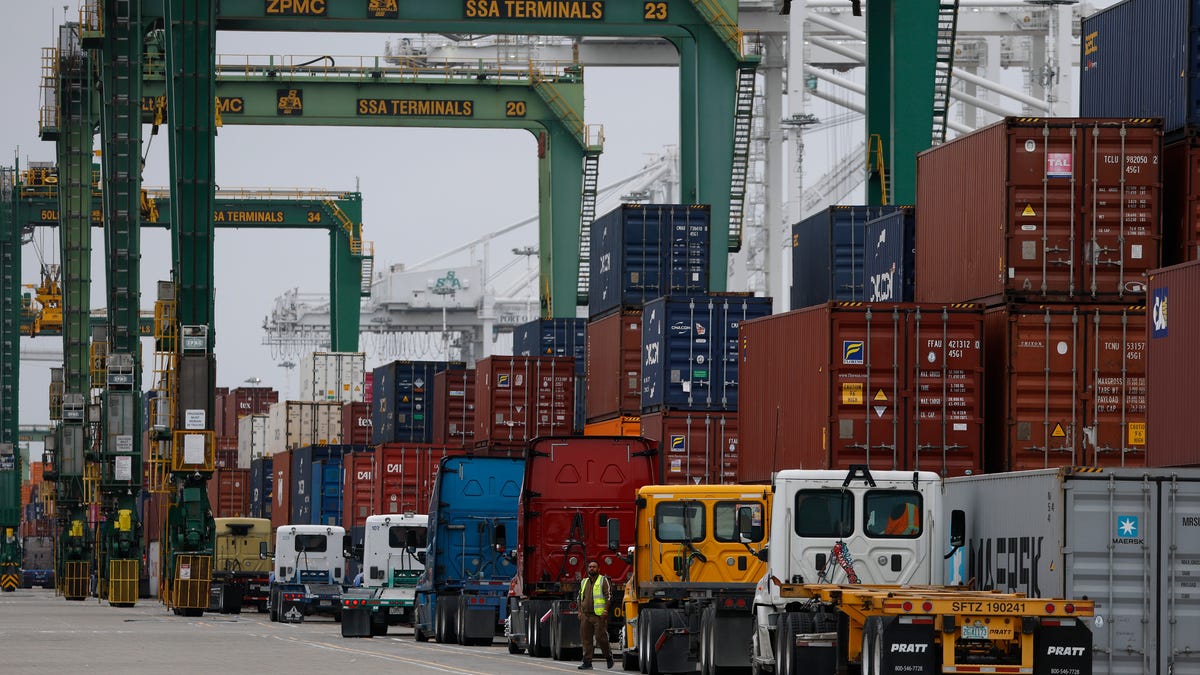
Corporate Giants Reassess Earnings Forecasts Amid Tariff Turmoil
Major U.S. corporations, including Ford and Chipotle, are revising their earnings forecasts as escalating trade wars trigger widespread tariff turmoil. The reassessments come amid rising costs for imported materials and supply chain disruptions, forcing companies to adjust financial projections. Investors face growing uncertainty as these revisions signal potential ripple effects across the economy. Analysts warn the situation may worsen without trade policy resolutions.
Trade War Fallout Hits Key Industries
The latest round of tariffs targeting $300 billion in Chinese goods has sent shockwaves through corporate America. Ford Motor Company lowered its 2024 profit margin guidance by 1.5 percentage points, citing a 20% increase in steel and aluminum costs. Meanwhile, Chipotle Mexican Grill revised its same-store sales growth projection downward after avocado prices surged 35% year-over-year.
“These tariffs are creating a perfect storm for cost-push inflation,” explains Dr. Rebecca Linwood, chief economist at Stratford Advisory Group. “When multinationals face higher input costs, they typically either absorb the hit to margins or pass costs to consumers—both scenarios create economic headwinds.”
Recent data illustrates the growing pressure:
- S&P 500 companies mentioning “tariffs” in earnings calls rose 62% last quarter
- Manufacturing input costs increased at fastest pace since 2008
- Retail inventory-to-sales ratio hits 1.43, highest in a decade
How Companies Are Adapting to Supply Chain Shocks
Corporate leaders are deploying multiple strategies to mitigate tariff impacts. Ford announced plans to shift production of certain components to Vietnam and Mexico, while Chipotle is testing alternative avocado suppliers in Peru and Colombia. Other approaches include:
- Accelerating automation to offset labor cost pressures
- Renegotiating contracts with suppliers
- Increasing local sourcing where feasible
However, these transitions require significant time and capital. “You can’t just flip a switch and reconfigure supply chains that took decades to build,” notes supply chain expert Mark Henderson of Boston Consulting Group. “Most companies need 12-18 months to implement meaningful changes without disrupting operations.”
Investor Reactions and Market Implications
The earnings forecast revisions have triggered notable market movements. The consumer discretionary sector underperformed the S&P 500 by 4.2% last month, while industrial stocks saw increased volatility. Bond markets reflect growing risk aversion, with investment-grade corporate bond spreads widening to 150 basis points.
“Investors are playing defense right now,” says portfolio manager Jason Wu of BlackRock. “We’re seeing rotation into sectors with domestic-focused revenue streams and pricing power, like healthcare and utilities.”
Diverging Views on Economic Impact
While most analysts express concern, some argue the tariff effects may be temporary. Treasury Secretary Janet Yellen recently stated that “the U.S. economy has sufficient resilience to absorb these transitional costs.” Proponents of tough trade policies contend that short-term pain will yield long-term benefits by reshoring critical industries.
Critics counter with alarming projections:
- JPMorgan estimates tariffs could reduce 2024 GDP growth by 0.3-0.5%
- National Retail Federation warns of $1,200 annual cost increase for average household
- Manufacturers Association predicts 175,000 potential job losses
What Comes Next for Businesses and Consumers
Corporate earnings revisions often precede broader economic shifts. Historical patterns suggest that when over 40% of S&P 500 companies lower guidance, recession risk increases within 12-18 months. Current conditions mirror pre-recession periods in 2000 and 2007, though fundamental differences exist.
Key indicators to watch include:
- Q3 earnings season guidance updates
- Federal Reserve interest rate decisions
- Consumer spending trends during holiday season
Preparing for Continued Volatility
Financial advisors recommend investors review portfolio allocations and stress-test assumptions. “This isn’t the time for reactionary moves, but prudent reassessment,” advises wealth manager Sarah Chen. “Focus on quality balance sheets, diversified income streams, and reasonable valuations.”
For businesses, experts suggest accelerating contingency planning. Companies that developed tariff playbooks during earlier trade disputes generally fared better. Common proactive measures include:
- Securing alternative suppliers before disruptions occur
- Building inventory buffers for critical components
- Developing pricing elasticity models
As the situation evolves, stakeholders across the economic spectrum must stay informed and agile. Subscribe to our market insights newsletter for ongoing analysis of these developing trends.
See more Business Focus Insider Team
