
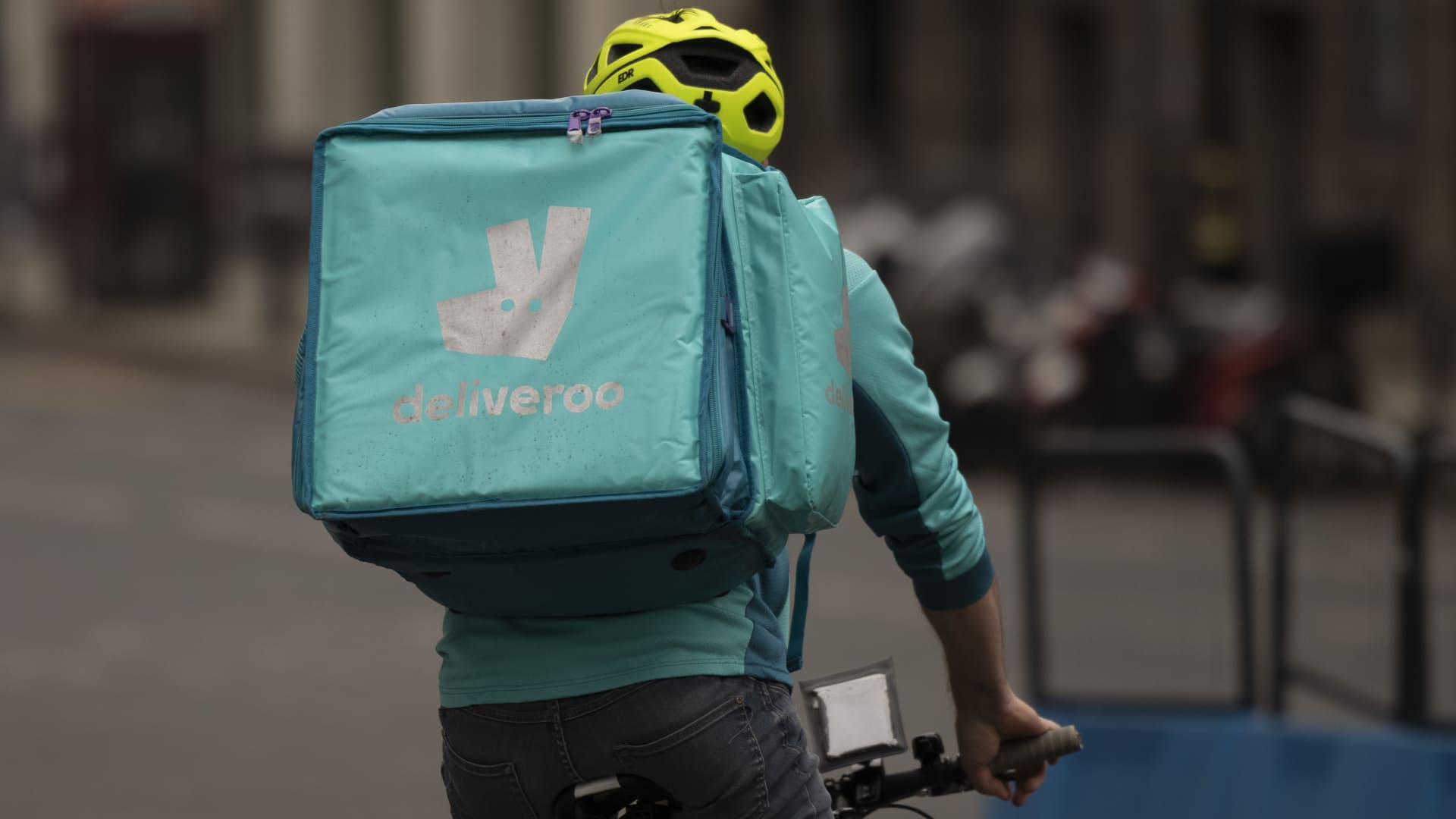
DoorDash’s $3.9 Billion Acquisition of Deliveroo Reshapes Food Delivery Landscape
In a seismic shift for the global food delivery industry, DoorDash announced plans to acquire UK-based rival Deliveroo for $3.9 billion on Thursday. The all-cash deal, expected to close by Q1 2024, marks DoorDash’s boldest international expansion yet and creates a combined entity serving 25 countries across three continents. This strategic move positions DoorDash to challenge Uber Eats’ European dominance while accelerating Deliveroo’s path to profitability.
The Strategic Rationale Behind the Mega-Deal
Analysts view this acquisition as a textbook example of complementary market consolidation. DoorDash commands 65% market share in the U.S. but has struggled to gain traction abroad, while Deliveroo holds the #2 position in the UK (33% share) and strongholds in Western Europe and Hong Kong. “This is about buying instant scale in markets where organic growth would take years and billions in investment,” explains retail analyst Miranda Cheng of Bernstein.
The deal comes at a pivotal moment for both companies:
- DoorDash reported 27% YoY revenue growth last quarter but faces saturation in North America
- Deliveroo’s stock had fallen 62% from its 2021 IPO price before acquisition rumors surfaced
- Combined entity will process over 800 million annual orders with $15.4 billion in GMV
Market Reactions and Competitive Implications
Investors initially responded positively, with DoorDash shares rising 4.3% in pre-market trading. However, antitrust regulators may scrutinize the deal closely. The UK Competition and Markets Authority blocked Amazon’s minority investment in Deliveroo in 2019 before ultimately approving it.
“This creates a true pan-Atlantic delivery powerhouse,” notes foodtech venture capitalist Rajiv Sharma. “Uber Eats now faces serious competition in its most profitable European markets, while Just Eat Takeaway will need to reevaluate its strategy.”
Key competitive dynamics to watch:
- Market share battles in overlapping UK and German markets
- Potential technology sharing (Deliveroo’s premium kitchens + DoorDash’s logistics AI)
- Pricing power over restaurants and consumers
What the DoorDash-Deliveroo Merger Means for Stakeholders
Impact on Restaurants and Delivery Workers
The acquisition raises concerns among some restaurant partners about increased commission fees. “We’re already paying 30% to these platforms,” says London restaurateur Jamal Hassan. “Further consolidation could squeeze our margins to breaking point.”
Delivery riders face uncertainty about potential operational changes. Both companies classify workers as independent contractors, but DoorDash’s tipping model differs significantly from Deliveroo’s per-delivery fee structure. Worker advocacy groups are calling for transparency about employment terms post-merger.
Technological and Operational Synergies
The combined entity plans to leverage DoorDash’s industry-leading dispatch algorithm with Deliveroo’s hyperlocal market knowledge. Early integration priorities include:
- Expanding DoorDash’s white-label delivery service to Europe
- Implementing Deliveroo’s virtual restaurant concepts in North America
- Combining data analytics to optimize delivery times and reduce costs
Deliveroo’s premium “Editions” kitchens—dedicated delivery-only facilities—could help DoorDash expand its high-margin corporate catering business internationally. Meanwhile, DoorDash’s Drive platform for non-food deliveries may get rolled out across Deliveroo’s network.
The Road Ahead: Regulatory Hurdles and Integration Challenges
While both companies express confidence about regulatory approval, the deal faces several potential obstacles:
- UK CMA may require divestitures in overlapping London markets
- EU regulators could demand concessions in Germany and France
- Shareholder lawsuits have emerged questioning Deliveroo’s valuation
“The real test comes after regulatory approval,” warns mergers & acquisitions professor David Ellison. “Food delivery mergers have a spotty track record—remember Just Eat and Takeaway.com’s rocky integration? Cultural alignment between these two organizations will make or break the deal’s success.”
Future Outlook for the Combined Entity
Industry watchers predict the new DoorDash-Deliveroo will likely:
- Challenge Uber’s dominance in key European markets within 18 months
- Expand into 10-15 new countries by 2026
- Invest heavily in autonomous delivery technology
As the food delivery sector matures, this acquisition may trigger further consolidation. Analysts speculate about possible moves from Amazon, Walmart, or even grocery delivery specialists looking to counterbalance the new market leader.
The coming months will prove crucial as regulators examine the deal and integration teams begin their work. For now, one thing is certain: the global food delivery wars just entered a new, more intense phase. Follow our business section for ongoing coverage of this developing story.
See more Business Focus Insider Team
