
Inside BYD’s Ambitious European Factory: A Strategic Move to Dominate the EV Market
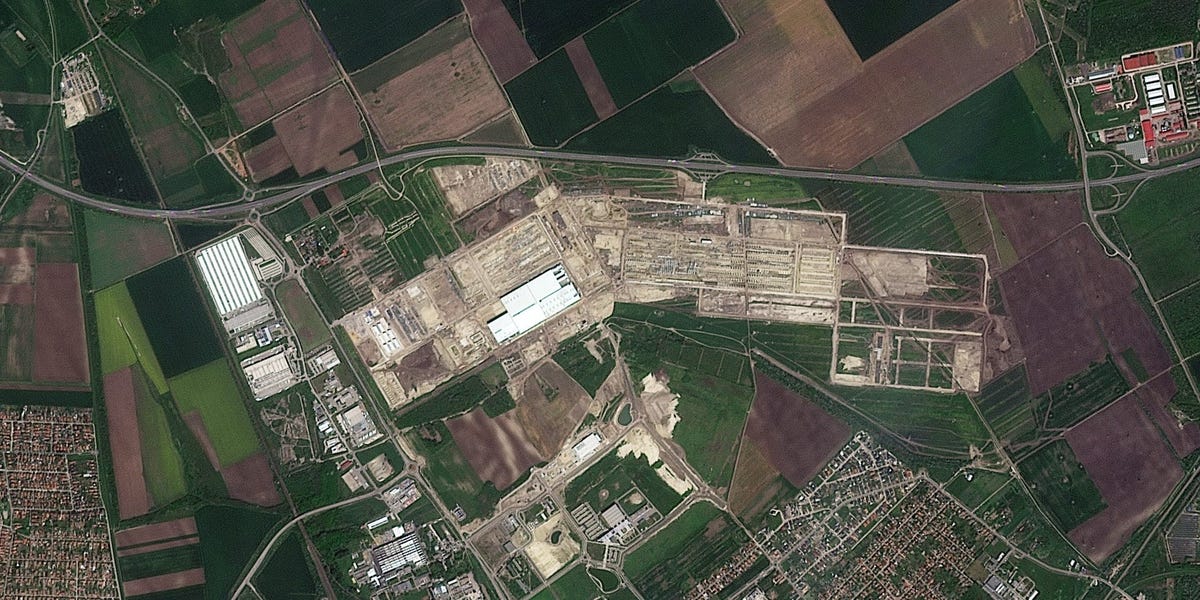
Satellite images reveal the swift construction of BYD’s first European electric vehicle (EV) factory in Hungary, marking a pivotal moment in the global EV race. The Chinese automaker, which surpassed Tesla in global EV sales last quarter, aims to challenge Tesla’s dominance by producing 200,000 vehicles annually at this facility near Szeged. Scheduled to open by 2026, the $2 billion plant underscores BYD’s aggressive expansion into Europe, leveraging local production to bypass tariffs and meet soaring demand for affordable EVs.
Why BYD’s European Factory Is a Threat to Tesla
BYD’s Hungary facility positions the company to undercut European rivals on price while avoiding the European Union’s 10% tariff on Chinese-made EVs. Analysts note the factory’s strategic location provides access to:
- Central Europe’s skilled labor force (average manufacturing wages: €10.50/hour vs. Germany’s €24)
- Established automotive supply chains (Hungary hosts 4 BMW and 3 Mercedes factories)
- Efficient distribution routes to key markets like Germany and France
“This isn’t just a production center—it’s a beachhead,” says Dr. Elena Schmidt, automotive analyst at Bernstein Research. “BYD can now compete with Tesla’s Berlin Gigafactory on delivery times while maintaining a 15-20% cost advantage through vertical integration.”
The Scale and Speed of BYD’s European Expansion
Maxar Technologies’ satellite images show the 300-hectare site transforming from empty fields to a partially roofed structure in just 5 months—30% faster than Tesla’s Berlin build-out. The project highlights BYD’s signature speed-to-market approach:
| Metric | BYD Hungary | Tesla Berlin |
|---|---|---|
| Construction Start | Q3 2023 | Q1 2020 |
| Planned Opening | Q4 2025 | Q1 2022 |
| Phase 1 Capacity | 150,000 units | 250,000 units |
BYD plans to initially produce its Dolphin and Seal models locally, with the Atto 3 SUV following in 2026. The company has already secured 12% of Europe’s imported EV market share in 2023, according to Schmidt Automotive Research.
How European Automakers Are Responding
Traditional manufacturers face mounting pressure as BYD’s $15,000 Seagull (planned for European release in 2027) could undercut even budget offerings like the Renault Twingo EV. Stellantis CEO Carlos Tavares recently warned: “The Chinese offensive is possibly the biggest risk threatening our companies.” Meanwhile, Volkswagen accelerated its own EV factory plans in Spain, moving its timeline forward by 18 months.
However, some industry voices remain optimistic. “Competition drives innovation,” notes Matthias Schmidt, founder of European Electric Car Report. “BYD’s entry will force European brands to improve battery tech and streamline costs—consumers ultimately benefit.”
The Geopolitical and Economic Implications
The European Commission’s ongoing anti-subsidy investigation into Chinese EVs (due to conclude November 2024) adds complexity. BYD’s local production neatly sidesteps potential tariff hikes while qualifying for EU green manufacturing subsidies. The factory is projected to:
- Create 5,000 direct jobs by 2027
- Boost Hungary’s GDP by 0.8% annually
- Reduce shipping emissions by 85% versus China imports
Hungary’s Minister of Foreign Affairs Péter Szijjártó called the investment “a vote of confidence in Central Europe’s automotive future,” though critics note the country’s 9.3% corporate tax rate—Europe’s lowest—played a key role.
What’s Next for the EV Market?
With BYD targeting 1.5 million annual European sales by 2030, analysts predict a ripple effect:
- Tesla may accelerate its $25,000 compact car project
- Battery recycling partnerships will grow as BYD brings its blade battery tech
- Dealership networks face disruption from BYD’s direct-sales model
As construction crews work around the clock, one truth becomes clear: The EV revolution just gained a powerful new European foothold. For consumers, this means more choices and competitive pricing. For automakers, it’s a wake-up call to innovate or risk obsolescence.
Want to track BYD’s progress against Tesla and other EV makers? Subscribe to our weekly Auto Disruption Report for exclusive factory drone footage and market analysis.
See more Business Focus Insider Team
