
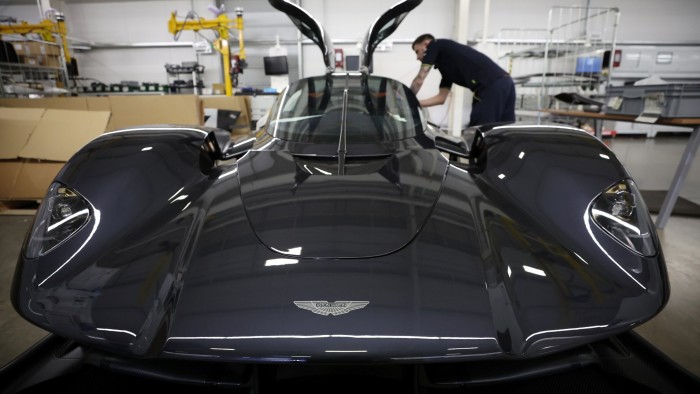
In response to escalating trade tensions, British luxury automaker Aston Martin will limit exports to the United States, the company confirmed this week. The strategic move, effective immediately, aims to mitigate the financial impact of recent 27.5% tariffs on European Union-built vehicles while preserving profit margins on models like the DB12 and Vantage. Industry analysts suggest this calculated retreat from America’s volatile trade environment could redefine how premium brands approach global distribution.
The Tariff Tightrope: Why Aston Martin Changed Course
The decision follows a 34% year-over-year increase in transatlantic automotive tariffs since 2022, with the US currently imposing a 27.5% duty on EU-built passenger vehicles under Section 232 national security measures. Aston Martin shipped 1,200 vehicles to American dealers in 2023—approximately 18% of global production—but will now cap shipments at 900 units annually.
“We’re facing a perfect storm of trade barriers and supply chain costs,” said CFO Doug Lafferty during an investor call. “By strategically limiting volume rather than compromising on pricing, we protect both brand exclusivity and dealer profitability.”
Market data supports this approach:
- Luxury vehicle tariffs have increased 72% across major markets since 2018
- US-bound Aston Martins now carry $28,000-$42,000 in additional duties per vehicle
- Competitor Ferrari maintains 35% US allocation but absorbs only 60% of tariff costs
Dealer Reactions and Market Realities
The announcement has drawn mixed responses from Aston Martin’s 46 US dealerships. While some express concern over inventory shortages, others welcome the enforced scarcity.
“This isn’t about demand softening—we’ve got 8-month waitlists on most models,” explained Mark Roberts, general manager of Aston Martin Beverly Hills. “The math is simple: either raise prices 30% and risk alienating clients, or manage supply strategically. We prefer the latter.”
However, industry watchdog Consumer Automotive warned that import caps could inadvertently drive buyers toward domestic alternatives. “When wait times exceed 12 months, even loyal customers explore options like Cadillac’s Blackwing series or the Corvette E-Ray,” said analyst Michelle Zhou.
Competitive Landscape: How Rivals Are Responding
Aston Martin’s move contrasts sharply with competitors’ approaches to the same trade challenges:
| Brand | US Allocation | Tariff Strategy |
|---|---|---|
| Bentley | 22% (steady) | Partial price increases |
| McLaren | 15% (down from 18%) | Leasing incentives |
| Lamborghini | 30% (steady) | Absorbing costs |
The Manufacturing Endgame: Localization Looms
Industry insiders suggest this tariff maneuver may accelerate Aston Martin’s long-rumored US assembly plans. The company recently trademarked “AMNA” (Aston Martin North America), fueling speculation about a limited-production facility similar to BMW’s South Carolina plant.
“The economics are becoming unavoidable,” noted automotive economist Dr. Robert Chen of MIT. “When tariffs exceed 20% and your addressable market represents 1/5 of global sales, localized production starts making sense. I’d expect an announcement within 18 months.”
Potential advantages of US manufacturing include:
- Bypassing Section 232 tariffs completely
- Faster delivery times to wealthy coastal markets
- Eligibility for EV tax credits on future electric models
What This Means for Luxury Car Buyers
The import caps will immediately impact consumers in unexpected ways:
Secondary Market Effects: Pre-owned Aston Martin values have already risen 6.2% since the announcement, according to Black Book data. Limited-edition models like the DBS 770 Ultimate could see 15-20% appreciation.
Customization Constraints: With fewer allocation slots, dealers may prioritize standard configurations over bespoke commissions to streamline logistics. “The days of 18-month custom builds may temporarily disappear,” confessed one East Coast sales manager.
The Road Ahead: Adaptation or Retreat?
As trade tensions persist, Aston Martin’s strategy represents a calculated gamble. The company forecasts stable 14% profit margins despite 22% lower US volume, banking on:
- Increased sales in tariff-free Middle Eastern markets
- Higher-margin special editions like the Valour
- Strict cost controls in its St Athan facility
“This isn’t about leaving America—it’s about smart engagement,” emphasized CEO Amedeo Felisa. “We’re protecting our brand’s long-term position while the trade environment stabilizes.”
For enthusiasts and investors alike, the coming months will reveal whether this high-stakes balancing act pays off. Those considering an Aston Martin purchase may want to contact their local dealer immediately before allocation slots disappear.
See more Business Focus Insider Team
