
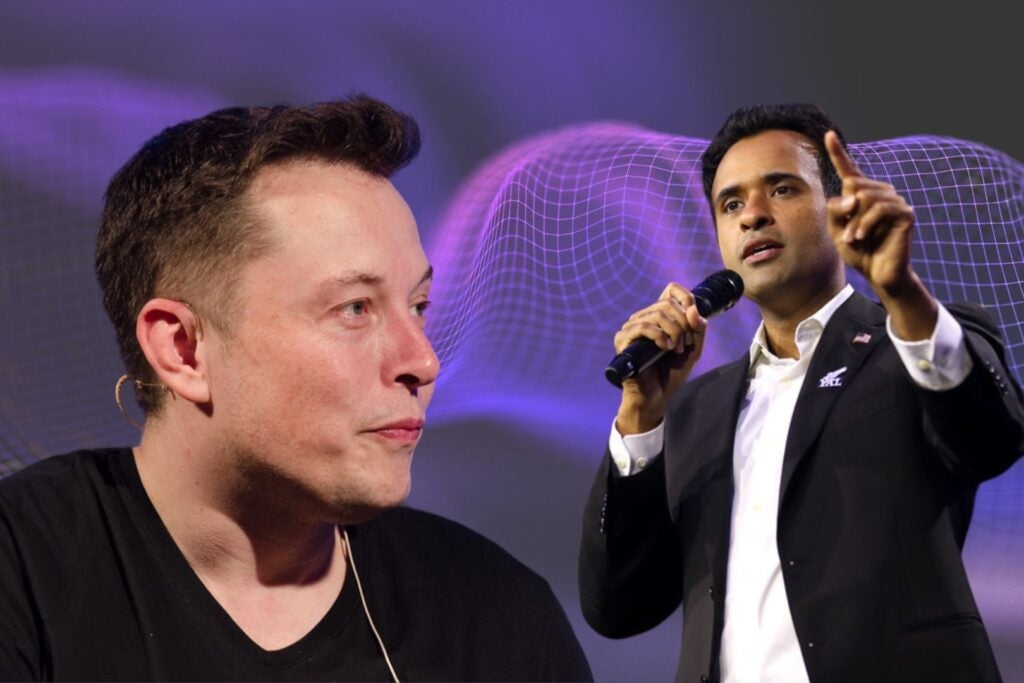
Behind the Scenes: How DOGE’s Influence is Shaping Tesla’s Competitive Landscape
In an era where cryptocurrencies are rapidly influencing various sectors, the automotive industry is not immune to their disruptive power. One of the most intriguing developments is the intersection of Elon Musk’s beloved cryptocurrency, Dogecoin (DOGE), with Tesla’s growing competitive landscape. As cryptocurrencies like DOGE are gaining traction, they are becoming increasingly influential in shaping the future of major automotive players, particularly Tesla’s rivals. Recently, the co-lead of Elon Musk’s DOGE initiative, Vivek Ramaswamy, has raised concerns about the financial strategies of Tesla’s competitors, namely Stellantis and Rivian, which may signal new dynamics in the competitive race for electric vehicle (EV) supremacy.
The Rising Influence of Dogecoin and Its Impact on the Automotive Industry
Dogecoin’s unique position in the crypto ecosystem is worth noting. Originally created as a meme coin, it has grown into a legitimate cryptocurrency supported by a strong community and high-profile advocates like Elon Musk. Musk’s endorsement of DOGE has significantly boosted its credibility, pushing the coin into the spotlight and intertwining it with several key business ventures under his leadership, including Tesla, SpaceX, and The Boring Company. Tesla’s decision to accept DOGE as a payment method for certain products, including merchandise, has been a major step in merging cryptocurrency with mainstream business operations.
But the influence of DOGE goes beyond Tesla’s own business model. As the co-lead of the DOGE initiative, Vivek Ramaswamy has emerged as a central figure in connecting the dots between cryptocurrency and the automotive sector. His recent commentary and strategic moves, particularly his critique of rival automotive companies, shed light on the growing tension and competition between EV manufacturers.
The Stellantis Loan Controversy
One of the most recent developments in this ongoing narrative revolves around Stellantis, the parent company of brands like Jeep, Chrysler, and Dodge. Stellantis’ $7.5 billion loan, which was aimed at bolstering its electric vehicle efforts, has come under fire from Ramaswamy. He raised significant concerns regarding the financial underpinnings of such a loan, particularly its potential to distort competition and disrupt the automotive market. Stellantis is not alone in seeking major loans to fund their transition into electric vehicles—Rivian, another Tesla rival, secured a $6.6 billion funding round, also under scrutiny for its financial sustainability and market impact.
Ramaswamy’s vocal criticisms of both Stellantis’ and Rivian’s funding raises questions about the long-term viability of EV startups and legacy automakers shifting toward electrification. He points out that companies benefiting from massive loans or government subsidies may create an uneven playing field, allowing them to undercut Tesla’s dominance in the EV space. As a result, these financial strategies may have unintended consequences, including market distortions and unfair competition. Whether such claims are backed by sound financial analysis remains to be seen, but they certainly reflect a deeper issue in the automotive sector.
Tesla’s Competitive Position: A Threat to Rivals?
Elon Musk’s Tesla has become synonymous with electric vehicles, largely due to its market dominance and innovation in both technology and business strategy. However, as other companies increasingly enter the EV market, Tesla’s competitive position is not guaranteed. Rivian, Lucid Motors, and now Stellantis are all vying for a slice of the rapidly expanding electric vehicle market, each taking different approaches to funding, innovation, and production scale.
Tesla’s success, especially in the EV segment, is undeniably impressive. However, it faces growing challenges from newer entrants that are backed by substantial financial resources. Rivian, for example, has been in the spotlight for its ambitious production goals, including the Rivian R1T pickup truck and the R1S SUV. Despite production delays, Rivian’s backing by Amazon and Ford has provided it with the financial muscle to compete with Tesla at a significant scale. The company has yet to prove its ability to challenge Tesla directly in terms of market share, but it is clearly positioning itself as a competitor in both the high-end and mass-market EV sectors.
On the other hand, Stellantis’ involvement in the EV race brings a different dynamic to the competition. As a legacy automaker with a vast portfolio of well-established brands, Stellantis can leverage its existing infrastructure, supply chain, and customer base to push electric vehicles to a broader audience. But the major challenge for Stellantis lies in the execution. Will it be able to pivot quickly enough to meet the growing demand for EVs? The $7.5 billion loan and ongoing investment into electric platforms may not be enough if the company’s EV offerings fail to resonate with consumers or are unable to compete with the advanced technology and performance Tesla provides.
The Role of Government Support and Financial Strategies in Shaping the EV Market
The intersection of government policies, financial strategies, and cryptocurrency investments is creating a complex environment for automotive companies. Government subsidies and incentives have been a critical factor in enabling the rapid growth of the EV sector. In countries like the U.S., EV tax credits, zero-emission vehicle mandates, and infrastructure investments are providing automakers with significant financial incentives to transition to electric vehicles. Tesla, having benefitted from these incentives in its early years, now finds itself facing competitors who are likewise securing large amounts of government support.
- Stellantis has received a substantial loan as part of its strategy to transition toward electrification, a move that is being closely watched by both regulators and industry observers.
- Rivian’s substantial funding round, which includes investment from major stakeholders like Amazon, positions it well for future growth, but the company’s dependence on external funding sources raises concerns over its long-term sustainability.
- Tesla, on the other hand, has been largely self-financed and has already moved into mass production with highly successful models such as the Model 3 and Model Y.
As these companies continue to compete in a rapidly changing landscape, the role of financial strategies—whether government-backed loans or private investment rounds—will continue to shape their paths forward. However, it remains to be seen how government regulation will impact the relative success of these firms in the coming years. In particular, questions about the long-term environmental and economic impacts of such heavy investments in EV infrastructure will continue to be hotly debated.
Dogecoin and the Future of Cryptocurrency’s Role in Automotive Innovation
Beyond traditional financial strategies, the integration of cryptocurrency into the automotive industry is a growing trend. Dogecoin’s influence on Tesla’s brand is indicative of the larger potential role that cryptocurrency could play in reshaping business models. Dogecoin and similar digital currencies offer an alternative method of raising capital and connecting with a global audience. As more companies and individuals turn to cryptocurrencies, they could create new opportunities for automakers to raise funds and interact with customers in more decentralized, tech-forward ways.
In the case of Tesla, the company has integrated DOGE as a form of payment for certain products, signaling that the use of cryptocurrency is not just a speculative investment but a viable form of currency in the business ecosystem. This strategic use of digital assets could set the stage for future innovations in how cars are bought, sold, and financed. If other automakers follow suit, we could witness the creation of a new class of “crypto-friendly” EV companies, further complicating the competitive landscape.
Conclusion: The Competitive Landscape Is Set to Evolve
The intersection of cryptocurrency, financial strategies, and automotive innovation is creating a dynamic and competitive environment for companies like Tesla, Stellantis, and Rivian. As Tesla continues to dominate the EV space, its competitors are working hard to close the gap. However, the strategies these companies adopt—whether through substantial loans, investments, or cryptocurrency integration—will significantly impact their ability to compete in the evolving market.
Elon Musk’s DOGE initiative is only one example of how cryptocurrencies can shape business strategies in unexpected ways. As the market matures, it’s clear that the future of electric vehicles will not only be shaped by the vehicles themselves but by the financial systems and technologies that support them. Companies that can adapt to these new paradigms—while remaining agile and innovative—will be the ones to define the future of the automotive industry.
For more insights into the ongoing battle for EV dominance, visit Tesla’s official website and explore the latest updates from industry experts at CoinTelegraph.
See more Business Focus Insider Team
